Friday, March 29, 2013

A Well Running Dry


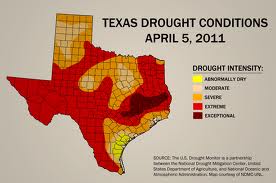
It comes as no surprise that Texas is facing a substantial battle with Mother Nature over water accessibility, given its rapidly growing metropolitan population, its harsh arid climate, and the effects of global warming that are penetrating our planet.  Our current water conservation efforts are not adequate enough.  Texas needs to implement tighter restrictions on water usage in order to provide security for the future of the state.               
Texas government needs to allocate a greater number of resources to maintaining and preserving water levels.  The state needs to invest in aquifer storage and recovery systems, especially in counties where there is an imminent threat of drought.  There also needs to be more aggressive conservation measures implemented which aim to reduce both indoor and outdoor water use and expand the use of recycled water.  According to estimates from the Texas Water Development Board, 40 percent of all municipal water use is outdoors and half of that is lost to runoff from the excessive watering of lawns. Additionally, the general public needs to be better educated and informed on the severity of the issue.  It must be emphasized that the restricted use of water during drought is not long-term water conservation, but instead, it is a temporary response to a condition of drought.  We need to find long-term solutions to this problem.         
The effects of drought have already cost the state of Texas billions of dollars.  The reported agricultural losses due to drought-induced fires in 2011 were $7.2 billion.  The reported cattle sector losses in 2011 were $3.23 billion.  Finally, the reported cotton production losses were $2.2 billion.  The state would be able to proactively prevent losses as extreme as these by allocating a fraction of the money to drought management techniques.  Now is the time to tighten and enforce water conservation regulations in the state of Texas, to set an example for other states, before it is too late.


Friday, March 8, 2013

Guns in College Classrooms Bill


The blog post by John Woods analyzing the newly introduced “Guns in College Classrooms” bill highlights the extremely disconcerting process of legislation.  This piece of legislation, introduced by chairman Joe Pickett, a Democrat from El Paso, TX, will ultimately force colleges and universities to allow students to carry assault weapons in classrooms.  What is even more outlandish than the bill proposal itself is the fact that the hearing for the bill is happening during spring break, a time when most students are either out of the state or not politically and or socially engaged on campus. The author argues that this shows an extreme lack in judgment on the behalf of the bill proponents and an unfair policy process in general.  He also argues that this type of divisive scheduling, specifically scheduling hearings during school recesses, has happened in the past.  It is an unsustainable and non-democratic method of passing pieces of legislation that otherwise might not be passed.

The author’s intended audience is the general public, but he resonates especially with students who attend colleges and universities in the state of Texas.  His prerogative and passion behind this blog post is apparent from the beginning of the post.  He lost his girlfriend during the Virginia Tech massacre six years ago, and gun control is a very heated issue for him.  The author communicates and advocates for various organizations such as the Virginia Tech Review Panel and Gun-Free Schools of Texas.  He is also supporting other political solutions such as universal background checks in place of the newly introduced bill.  I sincerely hope that his post brings about awareness to this issue and facilitates policy reform.  

Friday, February 22, 2013

Texas Women's Health Program

The editorial that was published in the Austin American Statesman on Jan 24, 2013, by the Editorial Board, highlights the poor execution of the Texas Women’s Health Program, as it changed hands from federal oversight to state and local oversight at the beginning of 2013.  

The author criticizes the state of Texas for refusing to continue with the federally funded health care program that was affiliated with Planned Parenthood.  The federal government’s contribution to this program was a vast 32 million dollars, however, this coverage is now up to the state.   The author argues that the forecasted doubts behind the shortcomings of the state have been justified.  The state has already had considerable trouble in accurately providing a list of the health care providers for this new program.  The website with this information has incorrectly linked medical providers who are not affiliated with the program, as well as those providers who are no longer accepting new patients.  This makes it incredibly difficult for someone who is trying to obtain coverage.  Additionally, the author includes a report released by George Washington University, which states that at least five counties in Texas would ultimately struggle to accommodate the same number of women patients that had previously received care through Planned Parenthood.  These statistics are very ominous and the risks of not being able to provide care to the women in need are too great.  

I believe that the author’s intended audience is the general public, however, this article hits close to home for women.  I agree with the general sentiments behind this opinion piece, however I believe that it is incredibly early in the life of this program to declare it a failure.  I sincerely hope that progress can and will be made to ensure that this program continues to provide the same level of care as the original program, if not better.   

Friday, February 8, 2013

Letting Medicaid Slip Away

In a recent article, published Jan 2, 2013, The Texas Observer analyzes the risks that are associated with Gov. Rick Perry's refusal to expand the Texas Medicaid program.  As part of the Patient Protection and Affordable Care Act, otherwise known as "Obamacare," federal funding is available for each state with new recipients of Medicaid until 2017, and afterwards, each state would  receive federal reimbursements for 90% of costs.  This funding would go directly to serve those in need, and Texas is crying for help.  There are 6 million Texans currently living without insurance, which is the highest percentage in the country.  One out of every four Texans who are uninsured would finally have access to health care, as long as the Texas Medicaid program is expanded.

What then is the argument against expansion?  In June 2012, the US Supreme Court ruled that states have the right to refuse the expansion of Medicaid, Gov. Perry didn't miss a beat on that exception.  According to Gov. Perry, he believes that the real issue is about freedom, and federal support could threaten this freedom.  He also argues that every Texan has health care in this state (anyone can be treated in an ER), and that how the state pays for it and delivers it should be left up to the state.  However, he does not provide any alternative methods for administering care and effectively ensuring that Texans will be covered.  Gov. Perry obviously has never worked in a hospital before.  As someone who has seen the ERs filled to capacity, day in and day out, and understands the methodology behind patient care and treatment processes, I can assure you this it is not sustainable.  Sure, uninsured patients can seek medical attention in the ER for an ailment such as an exacerbation from diabetes, but they don't have the same access to follow up care, or life saving measures such as dialysis.


This issue is too complex and too many lives are at stake to justify refusing Medicaid expansion.  Studies are being published by the day, providing evidence that expansion will mean a significant decrease in deaths per year, on average, 6.1%, and a substantial decrease in overall state funding allocated to health care.  Furthermore, this issue has deep roots in Texas.  In 1965, President Johnson, a Texan, declared a war on poverty, and enacted the first Medicaid bill.  Now only 48 years later, Texas government is trying to undermine this progress.  This article is worth reading, regardless of your political stance or economic values.  It is a simple breakdown of the drastic repercussions of forfeiting federal assistance, and if nothing else, it will provide another perspective on this issue.